
ONOUSC — Student Health Insurance: practical guide
Information or access service for student health insurance under the official arrangements.
- Category
- Social services and health
- Profiles
- Citizens
- Data verified
- 2026-07-24
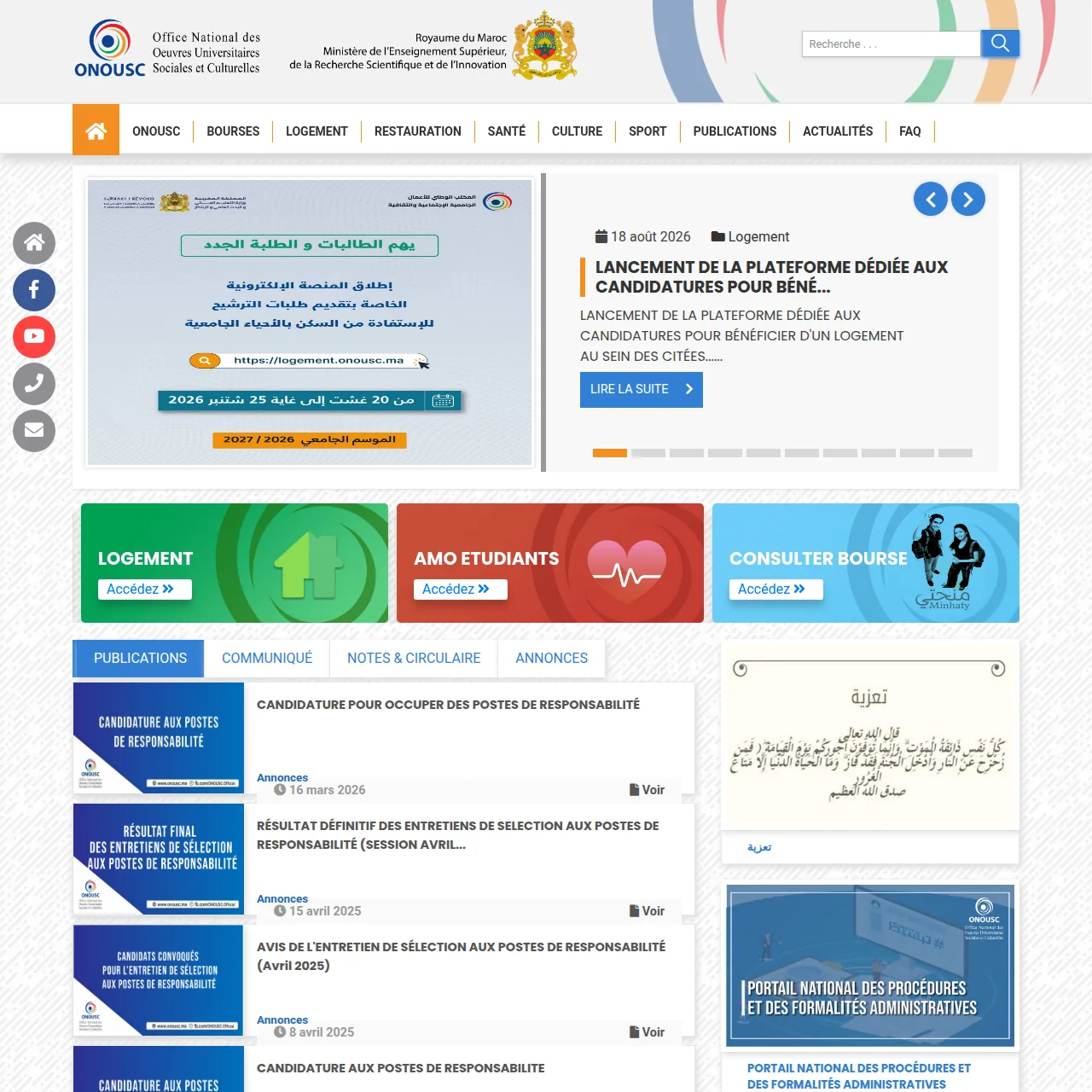
Quick answer. ONOUSC publishes the route for Student Compulsory Health Insurance (AMOE) and acts as an interface between students, educational institutions and CNOPS for several steps. Registration is normally not made by sending an informal file directly to ONOUSC; it goes through the university or institution during enrolment or re-enrolment.
What this service is for
The institutional information concerns eligible Moroccan and foreign students in the relevant higher-education, executive-training and certain preparatory programmes. Eligibility includes regular enrolment and, where the scheme requires it, the absence of another medical coverage. The student completes the form through the institution, which then forwards the request to CNOPS after the eligibility checks in the applicable process.
How to proceed in practice
ONOUSC states that the student’s CNIE number is used as the registration number for access to benefits. For students in the public sector, the contribution is presented as paid by the State, while a flat-rate contribution applies to students in the private sector. Because health-coverage rules can evolve, verify the current amount and conditions on the institutional page when enrolling.
Before starting, verify the current interface and requirements on the official portal. Keep any reference number, acknowledgement or confirmation generated by the competent body; e-services.ma is an independent guide and does not process the administrative file for you.
Important distinction
ONOUSC and CNOPS do not play the same role. ONOUSC organizes the relationship with students and institutions for registration and reception of certain files, while CNOPS is presented as the paying body that processes benefits. A university declaration error and a reimbursement delay may therefore need different contacts. Treatment files can be received through university-city offices or designated institutions depending on location.
Practical checklist
- Check that your annual declaration was completed through your institution.
- Use the AMOE follow-up link published by ONOUSC.
- Verify whether you are already covered as an insured person or dependant under another scheme.
- For a medical file, distinguish registration status from reimbursement processing.
Official sources checked on 8 September 2026
Key point: Start with your institution and the AMOE registration follow-up. Do not confuse health-insurance registration with the later submission or reimbursement of a medical-care file.