
DirectOMPIC — Patents: practical guide
Access to patent and innovation-protection procedures through OMPIC services.
- Organization
- OMPIC
- Category
- Business and investment
- Profiles
- Self-employed entrepreneurs, SMEs
- Data verified
- 2026-07-24
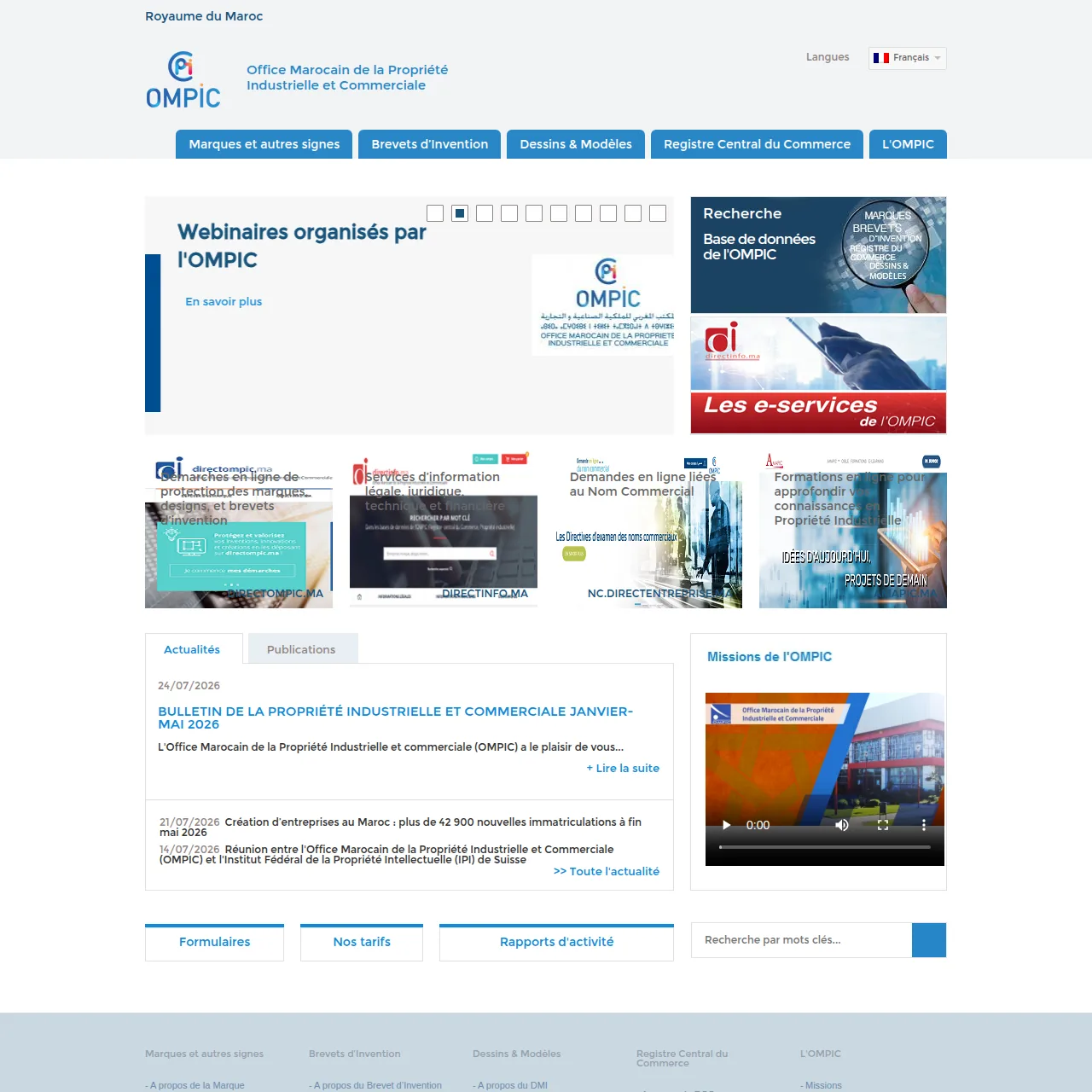
Quick answer. OMPIC provides online information and tools for patents, including prior-art searches, filing-related services, the national patent register and the publication server. A patent procedure is not the same as simply registering a business name or a trademark: it concerns a technical invention and requires a coherent technical and legal file.
Before filing: check the state of the art
A patent protects an invention only under the applicable conditions, including novelty. Before disclosing or filing, search existing patents and technical publications to understand what has already been made public. The OMPIC national register and publication tools are useful starting points, but a commercially important invention may justify professional intellectual-property advice.
What a patent application involves
OMPIC explains that the application includes technical documents describing the invention and defining the protection sought. The quality and consistency of the description, claims and accompanying material matter. A simple idea, commercial concept or product name is not converted into a patent by filling out a short generic form.
Main stages to distinguish
- Search: review prior patents and publications before filing.
- Prepare: organise the description, claims and supporting technical material.
- File: submit the application through the applicable OMPIC channel and pay the required fees.
- Examination and follow-up: respond to formal or substantive steps and deadlines shown in the procedure.
- Publication: the application is published according to the legal timetable if it has not been withdrawn or rejected.
- Grant and monitoring: after the required examination and fees, the patent may be granted and followed in the official register.
Do not confuse patent, trademark and company name
A patent concerns a technical invention. A trademark identifies goods or services, while a negative certificate or company name concerns business identification. Choose the OMPIC service that matches the right being sought; filing in the wrong category does not create the intended protection.
Official sources checked
- OMPIC — filing a patent in Morocco
- OMPIC — national patent register
- OMPIC — patent publication server
- OMPIC — understanding patents
Key point: separate search, filing and follow-up. Check prior art first, prepare a coherent technical file, then use the OMPIC tool corresponding to each stage.